
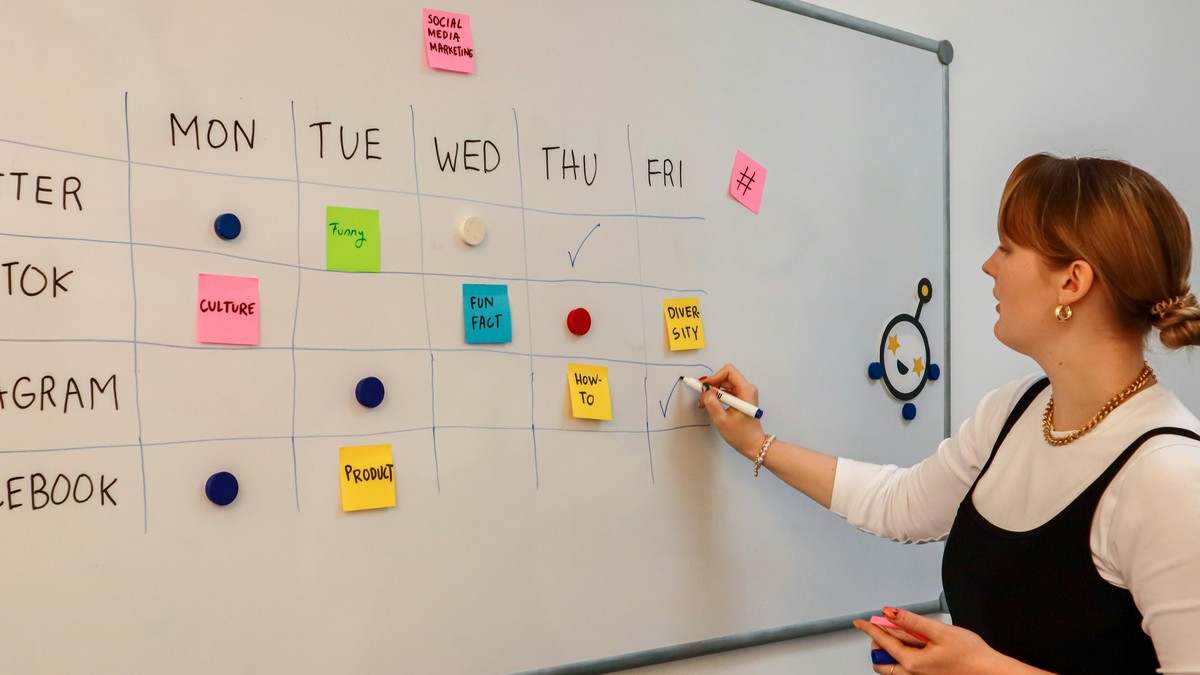
Content rarely fails because of creativity. It fails because production is inconsistent. A one-week content sprint solves that by batching decisions, setting clear outputs, and creating reusable parts. The goal is simple: ship enough finished assets to stay active for the next four weeks without panic-posting.
- Time: 5 working days
- Output: 8 to 12 publish-ready pieces plus a posting schedule
- Best for: small teams, founders, studios, and service brands
The rules that make sprints work
- One theme per week: do not mix unrelated topics inside the sprint
- Reuse on purpose: one long piece becomes many short pieces
- Ship daily: a sprint is a production week, not a brainstorming week
Day 1: Choose one theme and one promise
Pick a single theme that is both useful and repeatable. Then write a one-sentence promise. Examples: “Stop wasting time on revisions” or “Make mornings calmer.” Your assets should all orbit this promise.
Build a topic list (20 minutes)
- 5 FAQs you answer every week
- 5 common mistakes clients make
- 5 before-and-after scenarios
- 5 short checklists
Day 2: Outline the anchor piece
The anchor piece is the source material for everything else. It can be a guide, a case study, or a studio process breakdown. Keep it practical. The goal is to produce reusable sections.
Anchor structure (copy and paste)
- Problem snapshot in one paragraph
- 3 causes (simple language)
- Checklist: the steps that fix it
- Common pitfalls
- One example
- Next step
Day 3: Produce the core assets
Use the anchor to produce 3 to 4 primary assets. These are the pieces you will publish directly (blog, newsletter, LinkedIn post, or a short video script). Keep the outputs consistent so the week stays predictable.
Fast production order
- Write the anchor first
- Extract three smaller posts from three sections
- Turn one checklist into a carousel outline
- Turn one example into a short story post
Day 4: Create variations and cut-downs
This is where quantity comes from without lowering quality. You already have the ideas. Now make versions that fit different placements.
- Short: 150 to 250 words, one takeaway, one next step
- Medium: 400 to 600 words, checklist included
- Video: 60-second script built from the checklist
Day 5: Schedule and quality check
Scheduling is part of the sprint. If you end with drafts only, the next month will still be chaotic. Put the assets on the calendar and do a fast quality check pass.
Quality check (10 minutes per asset)
- Lead is concrete and not generic
- One scannable block exists (bullets or steps)
- One clear call to action is present
- No fluff endings
A sample week schedule
- Monday: Plan + topic list
- Tuesday: Outline anchor + gather examples
- Wednesday: Write and produce core assets
- Thursday: Create cut-downs and variants
- Friday: Schedule + polish + back up files
Next step
Pick one theme and run the sprint once. Keep the first sprint small. After you ship a month of assets without last-minute scrambling, scale up by increasing output, not by increasing chaos.